

Many years ago, face recognition system has been a technological dream for some people who were specifically involved in the research, and a fiction for others who had no idea of what could be done. At that time, anyone who had heard on such a technological project, had probably wondered: how will that be possible? How would that be done? According to the U.S. Department of Homeland Security (2008, May), “Face recognition is a biometric technology that measures unique facial characteristics to identify and verify an individual.” Furthermore, Richler, Cheung, and Gauthier (2001) noted that, “The concept of holistic processing is a cornerstone of face recognition research.” However, the events of September 11th gave a new twist to the evolution of facial recognition technology. From its invention until now, facial recognition system has undergone enormous progress and has impacted some industries such as intelligence agencies, healthcare, and business. Homeland security has always been one of the main concerns for all Americans, and most importantly, a focus every four year on the United States presidential debates. As terrorist’s networks are expanding and multiply, the security of citizens is threatened. Ciampa (2015), observed that, “Random shootings, suicide car bombings, airplane hijackings, and other types of physical violence occur around the world with increasing frequency.” (p.3) Therefore, at the challenge of the insecurity caused by the growth of terrorism, facial recognition system seems to be an appropriate tool that helps prevent potential terrorist attacks and provide homeland security by identifying and stalking the criminals and terrorists wherever they are.
Current Use.
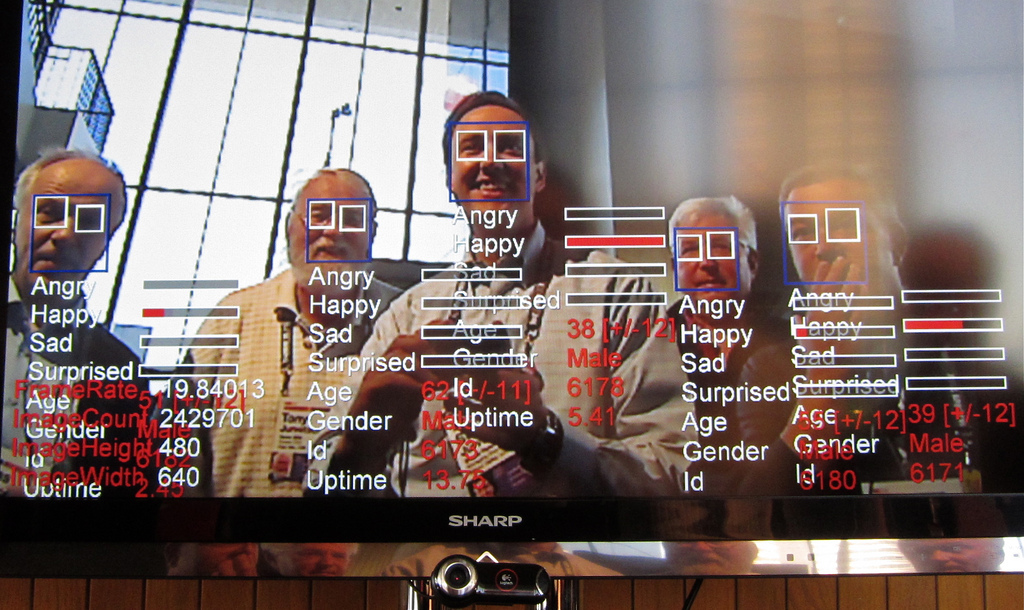
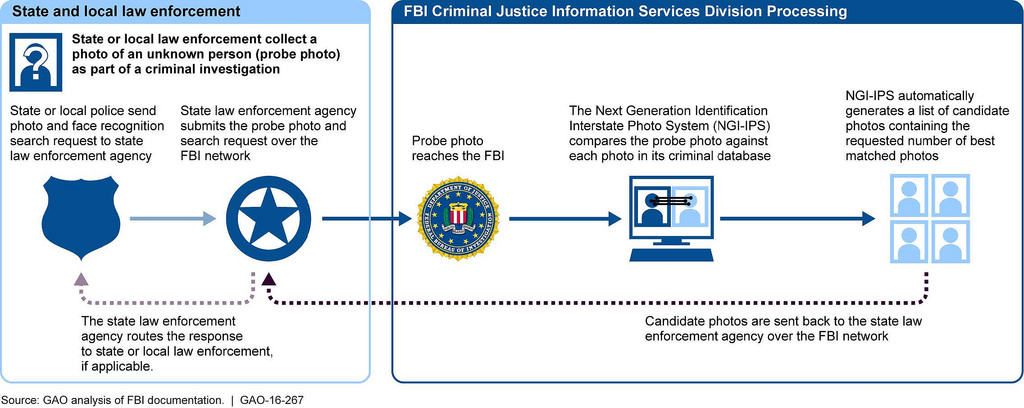
Depending on the domain, face recognition system is differently used but for the same purpose: the security. Li and Jain (2011), have stated that, “As a biometric system, a face recognition system operates in either or both of two modes: (1) face verification (or authentication), and (2) face identification (or recognition).” (p.2) Important to realize that intelligence agencies are likely more interested at face recognition technology, since it helps them accomplish effectively their job. That is to say, intelligence agencies use the technology to identify criminals and, if necessary, respond to potential threats that would have been planned by terrorists. For instance, three days after the 2013 bombing in Boston marathon, O’Neill (2013), reported that, “The FBI publishes surveillance photos of the bombing suspects on its website.” If FBI was able to identify the suspects amid a large crowd like the one gathered that day in Boston for the marathon, that was because they used face recognition technology. It did not take them long to isolate the two images and identify them to the suspects. Thus, the use of face recognition technology in the context of fighting insecurity deserves to get everyone’s approval. For this reason, I totally agree with Cordesman (2002) as he pointed out that, “Homeland defense must respond to the full range of threats.” (p.13)
Whereas, face recognition software in smartphones is used as a feature that helps secure the device from robbery. In this case, face recognition technology in smartphones is mainly used as password, preventing anybody else who is not the owner to use the device without a prior authorization. The use of face recognition in this context is not bad either. So, when does the use of facial recognition technology become a security problem against its users? Let’s consider the security aspects of face recognition system.
Security Aspects.
Data privacy and human rights seem to be real concerns when it comes to think of the security aspects of face recognition system. In 2007, Newton, Sweeney, and Malin pointed out that, “In the context of sharing video surveillance data, a significant threat to privacy is face recognition software.” (Abstract) I agree with them, because they just made a point that many are not aware of. At the present time, people of all ages and cultures, men, women and transgenders are extensively using social networking platforms such as Facebook, WhatsApp, Tweeter, Google+, to name but few, as communications media. They can take photos, make live videos with their smartphones, and get them posted in their virtual world. In fact, all those images are stored somewhere and are available anytime they want them. Though, it is important to note that, social media users get some of their images unpublished, they are posted on their pages, but they are kept private for them only, meaning that friends and public cannot see those images. The thing is, your data are available and viewable not for you only, but for unknown people as well. The use of face recognition technology makes people’s privacy right at risk to be violated. Your data, stored somewhere in the virtual world, can be accessed anytime by unknown people and be harmfully used against you. The unknown people can be hackers or intelligence agencies agents.
In the same way, threat to human rights is another concern related to security aspects of face recognition system. For this reason, Rudall and Mann (2008), observed that “The questions raised about an individual human rights being put at risk is also one that is being considered by many public organizations and by leading scientists.” Indeed, the use of face recognition technology in the intelligence industry put the human rights at risk not to be respected. This will lead to a violation of the Constitution of the United States, which guarantees people protection against unreasonable searches. (U.S. Const. amend. IV.) Search means investigation, and facial recognition is a step in the investigation process. What do human rights mean for Americans? For American citizens, the value of human rights is not to be simply limited to a constitutional provision only. It means more than that, human rights are a legacy from the founding fathers of the United States of America. Moreover, human rights are part of divine norms, especially as it is written, “It is for the freedom that Christ has set us free.” (Galatians 5:1 New International Version)
Ethical and Social Implications.
According to Langenderfer and Linnhoff (2005), “Biometric systems are quickly becoming a standard part of modern life…” As a biometric feature that can be found almost in all the devices of last release, face recognition technology has Ethical and Social implications in people everyday life. Leahy (2018), the mother of three daughters holds a master’s degree in school counseling and is a certified parent coach, has observed that a mom prevents her ninth-grader daughter using a smartphone to protect her socially, emotionally, mentally, and even physically. I think preventing a child from using a smartphone restricts them from (1) having an account in social networking platforms (2) taking pictures, (3) shooting live videos, and (4) posting images in virtual world. Therefore, it seems not to be fair, but the benefits of acting in such a way is, your child will be protected against internet’s abuse. For example, an unknown person can take her image and associate it to a group of bad people. Your child can be affected emotionally and mentally.
Future Use.
How will the technology be used in future? A good question, right? It’s a little tricky to say and predict how facial recognition system will be used in future. Few years ago, none of the consumers of technologic products such as smartphones, smart cars (autonomous cars), smart watches, etc. could say and predict the technological improvements we are all witnessing today. However, the evidence is that, the future will come with new improvements and face recognition technology may be used in the way we don’t have any idea yet. Perhaps in the future it will be imperative that each apartment be equipped with a monitoring system able to face-identify every single person who gets into the apartment. It will be interesting if automotive industry comes up with new cars designed with facial recognition technology. In fact, the technology already exists in public transportation such as buses, school buses, and metro trains. Technology is the world of wonders, and face recognition system is one of those wonders. What exists today is not the end of the whole. Time will tell, let’s wait and see.
Conclusion.
The spread of terrorism worldwide increases insecurity and the risk of terror attacks that could happen anytime. It is difficult to predict and tell when a terror attack will happen. It is not easy to identify people who are planning to carry an attack among us. It is quite difficult to know people who are working to make an attack happens. It is not evident to know what people – our neighbors – are doing in the secret, and what kind of activities they are engaged in. Given these points, besides being a security feature in some smartphones, I think face recognition technology is the best tool that helps intelligence agencies provide homeland security by monitoring, identifying and stalking criminals and suspects anytime and everywhere.
 Joseph Lava